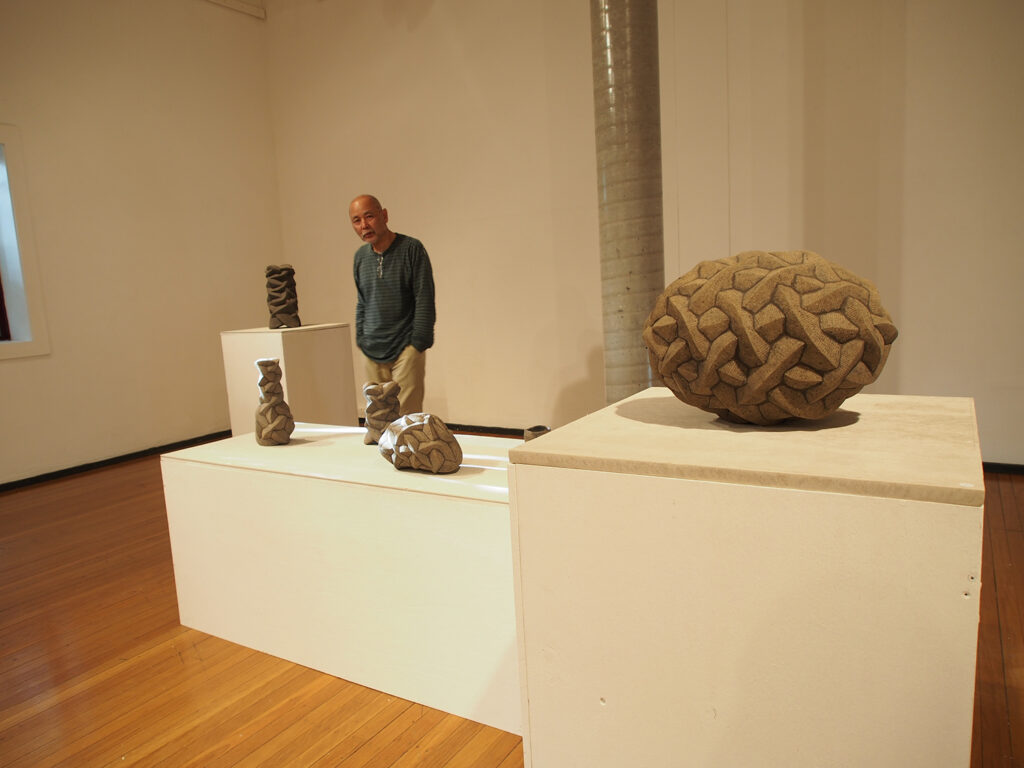
While travelling through Japan in 2015 and visiting many ceramic regions, I eventually settled in Tajimi, in the heart of the Mino Ceramic Valley. Just next door is Seto, another historic center of ceramic production. Heading into the mountains of Seto, near the Sanageyama archaeological site—home to over 1,000 kiln remains dating from the 5th to the 14th century—I met Shingo Takeuchi.
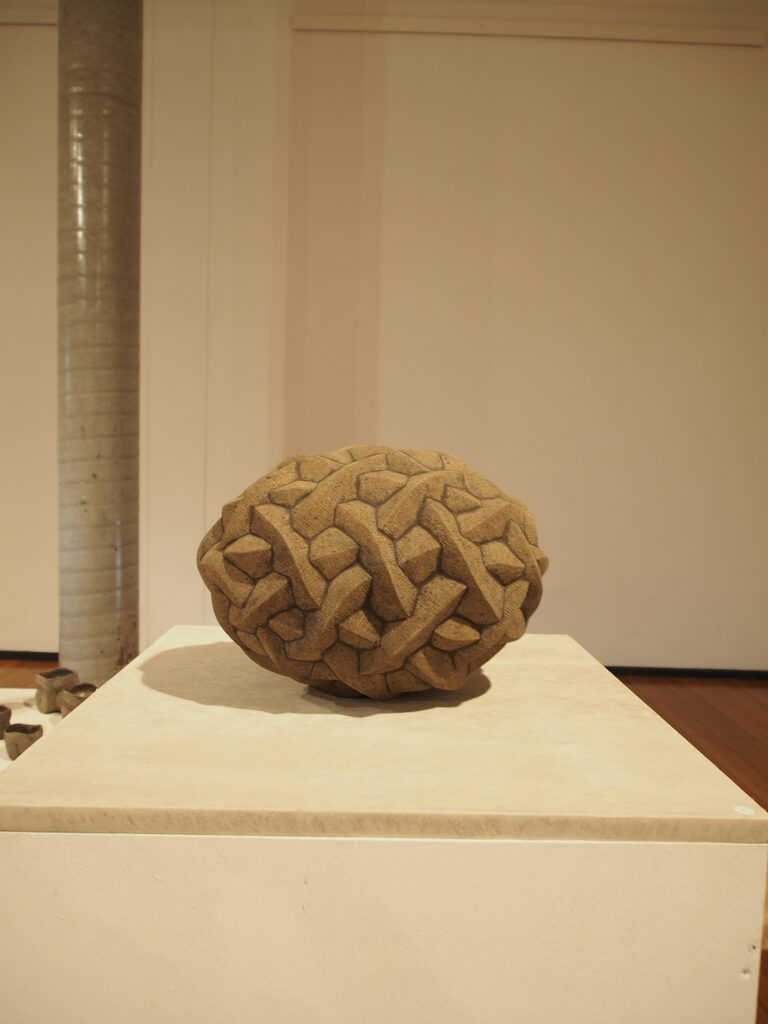
At the time, my own practice was focused on producing tableware quickly and efficiently. Encountering Shingo’s intricate, interwoven, hand-built forms completely shifted how I thought about clay. One of the most memorable conversations we had was about his approach to form and practice. It was also the first time I encountered the term Kōgei—often translated as “craft,” but carrying a much deeper cultural meaning within Japan.
Within the kōgei tradition, ceramic artists often use the word objet, derived from the French objet d’art, emphasizing technique, material sensitivity, and refined aesthetics. The term is deliberately used to distinguish these works from what is typically labeled as “sculpture” in the Western art world. This way of thinking deeply resonated with me, and I wanted to introduce these ideas to an Australian audience.
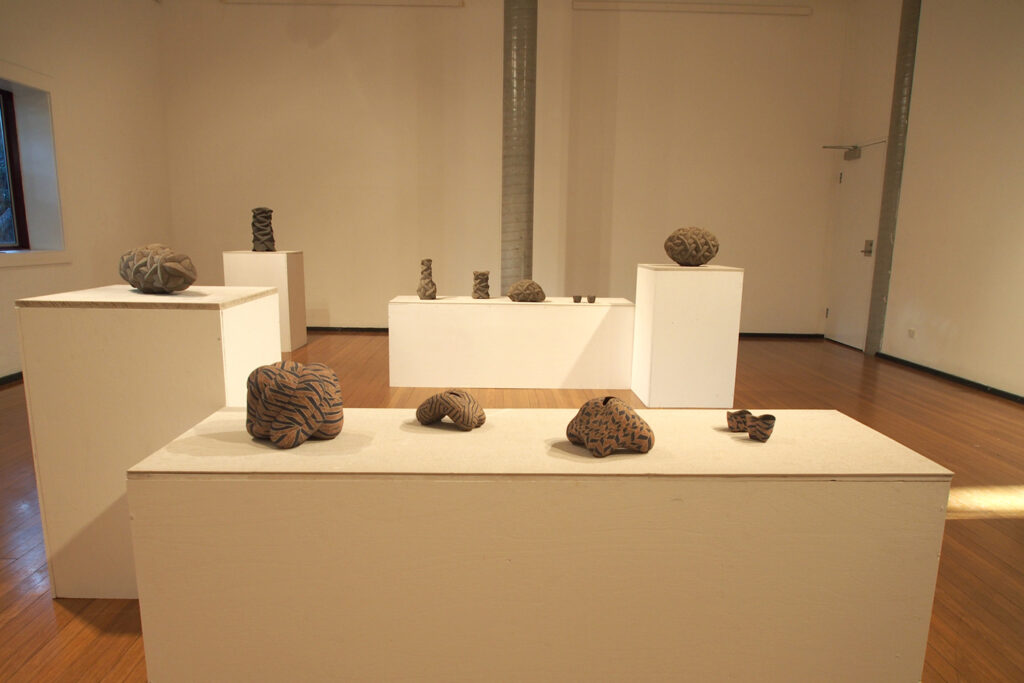
At the time, I was living in Sydney, and I hoped to showcase Shingo’s work there while opening up a broader conversation around kōgei, objet, and how these concepts might offer a different perspective on the often rigid distinctions between art, craft, and design in Western art education.
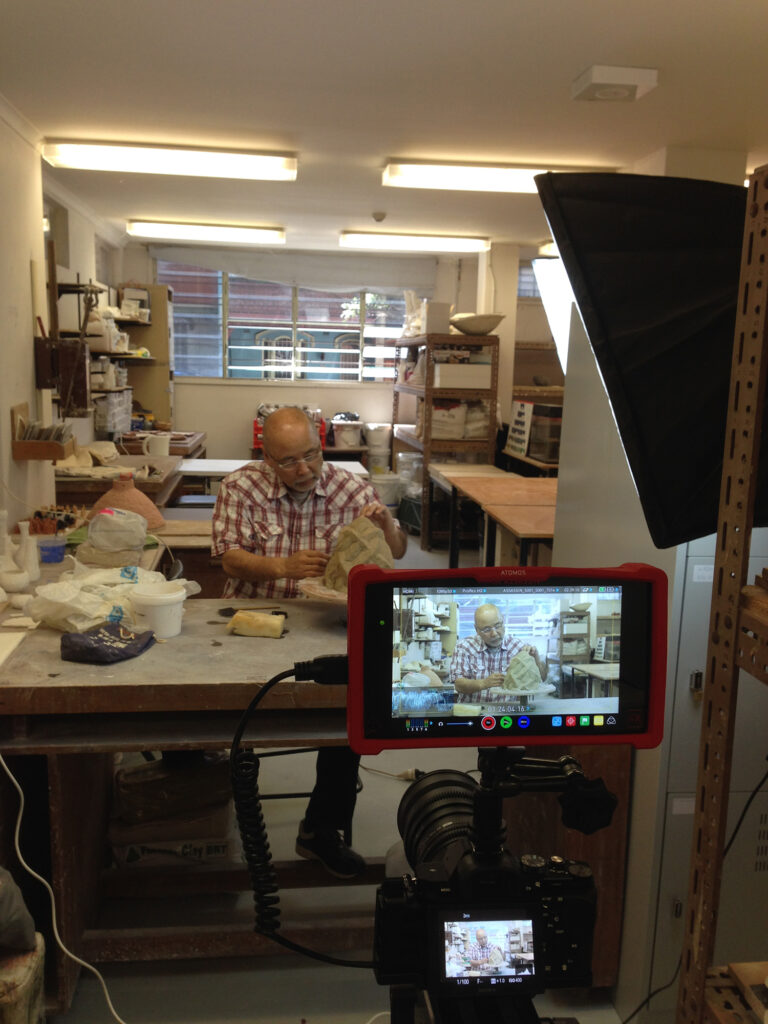
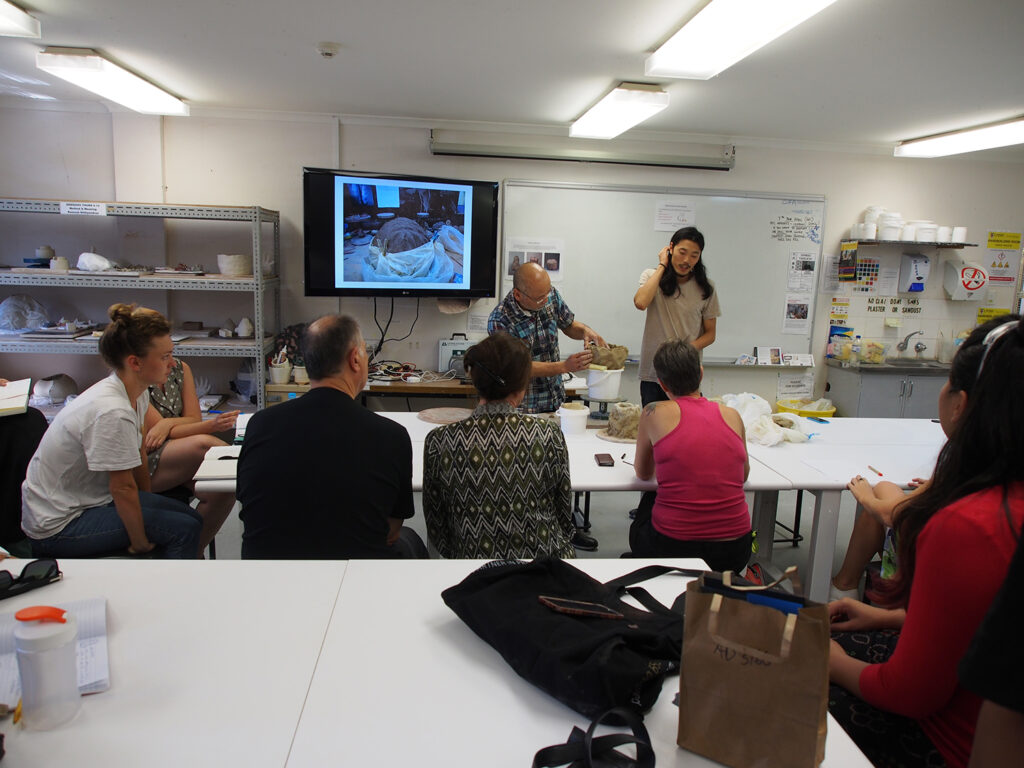
Together with my partner, we were fortunate to receive a grant from the Japan Foundation Sydney. This allowed us to organize workshops, lectures, and an exhibition at the University of New South Wales Art & Design (known as COFA at the time), as well as a satellite workshop at Northern Beaches TAFE.
Below are a few images from that period. My sincere thanks to everyone who participated and helped make this project possible.